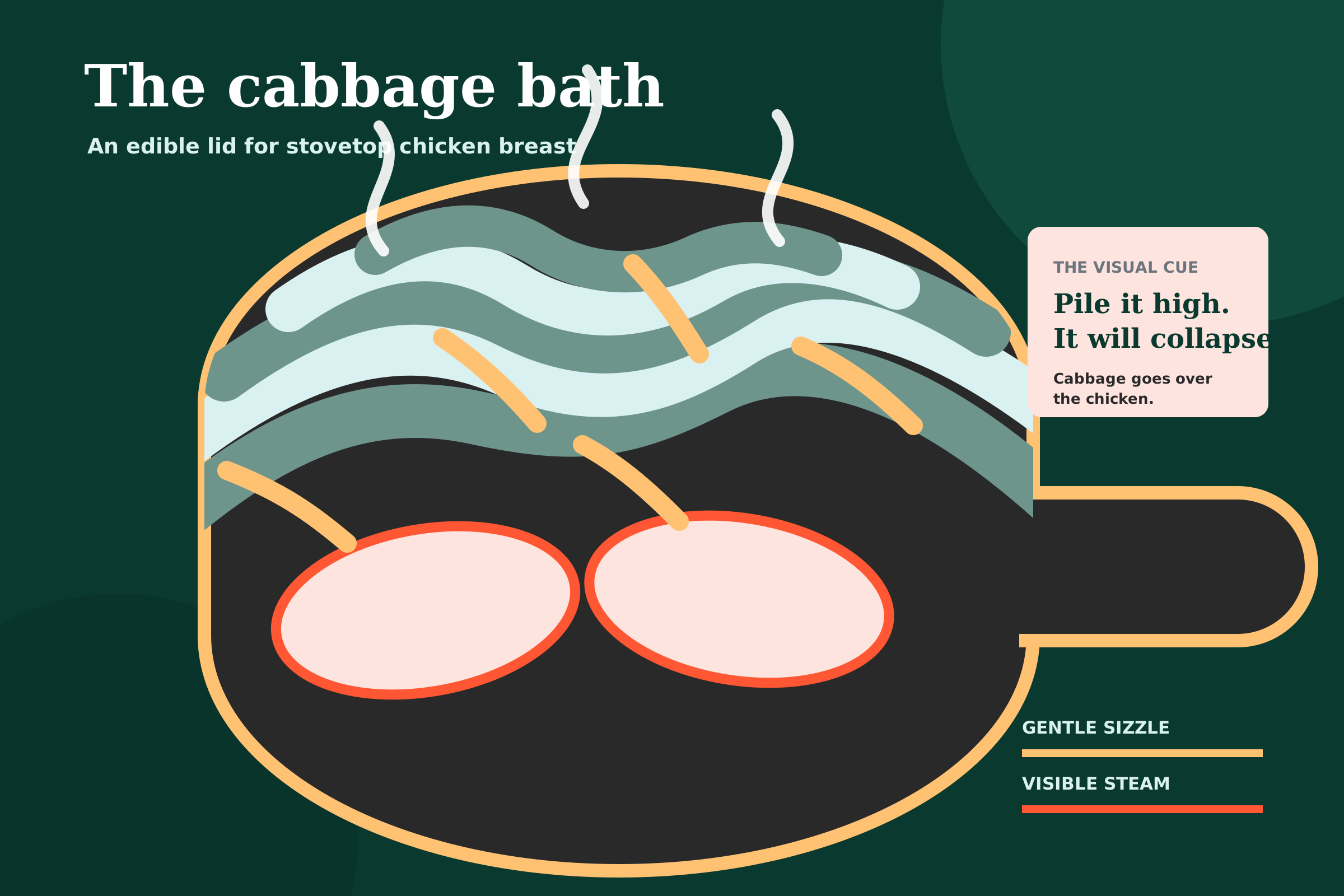
I wanted a way to cook chicken breast without either drowning it in oil or drying it out. The solution turned out to be an unreasonable amount of cabbage.
I call the method the cabbage bath. Two seasoned chicken breasts cook under a mountain of sliced green cabbage and onion. The vegetables begin as an almost comical pile, then collapse into the pan, releasing moisture, holding steam close to the chicken, and absorbing the chicken juices, olive oil, seasoning, and vinegar along the way.
The result is not chicken with a little cabbage on the side. It is juicy, strongly seasoned chicken with an enormous serving of deeply flavored vegetables—and one skillet to clean.
The idea
The cabbage is part of the cooking mechanism. It is an edible lid and a moisture reservoir.
A conventional lid holds water vapor inside the whole pan. Here, the cabbage and onion sit directly around and over the chicken. As they soften, their water becomes steam and cooking liquid, creating a humid pocket around much of the meat. The vegetables also shield a large portion of the chicken from direct exposure to the air.
That does not “seal in” the chicken’s juices, and moisture can still escape. It changes the cooking environment: less exposed dry heat, more steam, and gentler heat transfer during the part of the cook when a thick breast needs time to reach its safe internal temperature.
Ingredients
For approximately two large servings:
- 2 large boneless, skinless chicken breasts
- 1/2 to 1 medium green cabbage, depending on size, thinly sliced—about 1 1/2 pounds or 10 to 12 loosely packed cups
- 1 large yellow or white onion, sliced into strips
- 3 teaspoons Montreal Chicken seasoning, divided
- 1 tablespoon olive oil
- 1 tablespoon white vinegar, plus up to 1 teaspoon at the end if needed
- PAM cooking spray, enough for one light, even coating of the skillet
- Salt, only if needed after tasting
- 1/4 teaspoon freshly ground black pepper, optional
Montreal Chicken seasoning is the primary spice profile and already contains salt. Two teaspoons go directly on the chicken; the remaining teaspoon seasons the large volume of cabbage and onion. That second addition matters. An unseasoned vegetable blanket can dilute the flavor of the entire pan.
Equipment
- A large frying pan or skillet, ideally 12 inches across
- Tongs
- An instant-read meat thermometer
- A large bowl or cutting board for preparing the cabbage
No conventional lid is required. The cabbage is the lid.
The method
-
Prepare the vegetables. Remove the cabbage core, then slice the leaves into relatively thin strips, about 1/4 inch wide. Slice the onion into strips. Separate the cabbage strands with your hands so they will collapse evenly.
-
Season the chicken. Pat the chicken dry. Season both sides of each breast with 1 teaspoon Montreal Chicken seasoning per breast, pressing the seasoning onto the surface. If one end is dramatically thicker than the other, gently flatten the thickest part to make the breast more even; do not pound it thin.
-
Prepare the skillet. Lightly coat a large cold skillet with PAM, then add 1 tablespoon olive oil. PAM supplies broad baseline coverage, including the outer edges of the pan. The modest amount of olive oil contributes flavor and mouthfeel without turning the recipe into shallow frying.
-
Start the chicken. Set the skillet over medium heat, about 5/10. When the oil is hot and shimmering, add the chicken. Let the first side cook undisturbed for 2 minutes, then turn each breast and cook the second side for 1 minute. This brief start develops some browned flavor, but the objective is not a complete hard sear.
-
Build the cabbage bath. Keep the chicken in the pan. Add the onion around it, then place the cabbage around and especially over the chicken breasts. Use all of it. The pan may look absurdly overfilled; that is correct. Sprinkle the remaining 1 teaspoon Montreal Chicken seasoning and the optional 1/4 teaspoon black pepper across the cabbage.
-
Start the collapse. Stay at medium heat for 3 to 5 minutes. Use the tongs to lift and redistribute the cabbage at the outer edge and bottom of the pan, but keep a substantial blanket over the chicken. The goal is steady sizzling and visible steam as the mound begins to shrink.
-
Add the vinegar. Once the cabbage has started to wilt, drizzle 1 tablespoon white vinegar across the vegetables and around the pan. Adding it now lets the sharpest aroma cook off while the acidity moves into the cabbage and pan juices. Toss the upper vegetables lightly to distribute it without uncovering or repeatedly moving the chicken.
-
Lower the heat. Reduce the burner to medium-low, about 3–4/10. Continue cooking with the chicken under its cabbage bath. Every 3 to 4 minutes, redistribute the cabbage and onion so the vegetables touching the skillet do not remain trapped on the bottom. Keep returning cabbage to the top of the chicken.
-
Manage moisture, not oil. The pan should maintain a gentle sizzle and substantial steam. If the bottom becomes dry before the chicken is finished, add 1 tablespoon water around the edge of the skillet. Add a second tablespoon only if needed. Do not solve a dry pan by pouring in more oil.
-
Cook to temperature. Begin checking the thickest portion of each breast after about 15 minutes total in the pan. Continue until each one reaches the USDA safe minimum internal temperature of 165°F / 74°C. Internal temperature—not the clock—determines doneness. Depending on thickness, total cooking time will usually be about 20 to 30 minutes from the moment the chicken enters the skillet; an unusually thick breast can take longer.
-
Rest and finish. Move the chicken to a plate and rest it for 5 minutes. If the cabbage and onion still hold more liquid than you want, raise the heat to medium and cook them for 2 to 4 minutes, tossing occasionally, until the pan juices concentrate and the vegetables are tender. Taste before adding salt. For more brightness, add up to 1 teaspoon white vinegar to the finished cabbage—not another full pour.
-
Serve the whole pan. Place one chicken breast on each plate and surround it with a very large pile of cabbage and onion. Spoon the accumulated pan juices over both.
Heat is the trick
The temperature change is the control system for the recipe.
Medium, about 5/10, gets the pan hot, begins browning the chicken, and forces the first collapse of the cabbage. Staying there too long is the main failure mode: the cabbage and onion touching the skillet can burn before a thick chicken breast reaches temperature.
Medium-low, about 3–4/10, is where most of the cabbage-bath phase happens. It gives the chicken time to cook through while the vegetables release water, soften, and circulate steam. Too low, and the vegetables mostly stew while the cooking time stretches unnecessarily.
Listen for a gentle sizzle. Look for steam. If the cabbage is aggressively frying, turn it down.
The numbers on burner controls are only reference points. A heavy cast-iron skillet, a thin stainless-steel pan, and a powerful gas burner will behave differently. The sensory target is more reliable: a persistent but calm sizzle, visible steam, and vegetables that are softening without blackening on the bottom.
Why the cabbage bath works
Green cabbage contains a great deal of water. That is why 10 to 12 cups can fit in the finished dish even when the raw mound initially appears unreasonable. Heat breaks down the cabbage’s structure, the leaves lose volume, and their water enters the pan as vapor and liquid.
With the cabbage piled directly over the chicken, that moisture creates a humid microenvironment and reduces how much of the meat is exposed to drier circulating air. The chicken is still cooking from contact with the skillet, hot vegetables, liquid, and steam. In practical terms, the method combines aspects of sautéing, steaming, and shallow braising without a lid.
The exchange works in both directions. Chicken juices season the vegetables. Onion adds sweetness and savory depth as it softens. Olive oil carries the seasoning and rounds out the texture. Montreal Chicken seasoning supplies the garlic, pepper, herbs, and salt that define the pan’s main flavor.
The cabbage is therefore not garnish. It is cooking medium, moisture source, flavor sponge, and side dish at once.
The vinegar matters
Chicken, softened onion, cabbage, and olive oil can become rich but relatively flat. White vinegar provides the contrast.
The starting tablespoon is enough to brighten a large skillet of vegetables without turning the dish into vinegar chicken or pickled cabbage. Adding it after the cabbage begins to wilt spreads it through the newly released moisture and gives its harshest edge time to soften. The optional finishing teaspoon has a different job: it restores a small amount of fresh acidity if the cooked cabbage tastes muted.
Make that final adjustment only after tasting. It is easier to add brightness than to remove it.
The final plate
The finished chicken should be well seasoned and juicy, with some early browned flavor under a softer surface created by the cabbage bath. The cabbage and onion should be tender, savory, lightly tangy, and saturated with the pan juices—not oily and not swimming in liquid.
The proportion is intentionally unusual. Each breast gets a very large pile of vegetables, not a decorative spoonful. What looked like too much cabbage at the beginning becomes the right amount by the end.
This is the practical appeal of the method: a protein, a substantial vegetable, minimal added oil, and a sauce created inside one pan.
Recipe card
Prep time: 15 minutes
Approximate cook time: 20–30 minutes, plus a 5-minute rest
Servings: 2 generous servings
Ingredients
- 2 large boneless, skinless chicken breasts
- 1/2 to 1 medium green cabbage, thinly sliced (about 1 1/2 pounds or 10–12 loosely packed cups)
- 1 large yellow or white onion, sliced into strips
- 3 teaspoons Montreal Chicken seasoning, divided
- 1 tablespoon olive oil
- 1 tablespoon white vinegar, plus up to 1 teaspoon to finish
- PAM cooking spray, for a light coating of the skillet
- Salt, only if needed after tasting
- 1/4 teaspoon freshly ground black pepper, optional
Directions
- Thinly slice the cabbage and onion. Pat the chicken dry and season both sides of each breast with 1 teaspoon Montreal Chicken seasoning.
- Lightly coat a large skillet with PAM, add 1 tablespoon olive oil, and heat over medium (about 5/10).
- Cook the chicken for 2 minutes on the first side and 1 minute on the second.
- Add the onion around the chicken. Mound all the cabbage around and especially over the breasts. Season the vegetables with the remaining 1 teaspoon Montreal Chicken seasoning and optional black pepper.
- Cook at medium for 3–5 minutes, redistributing the cabbage at the edges as it wilts. Drizzle 1 tablespoon white vinegar over the vegetables and around the pan.
- Reduce to medium-low (about 3–4/10). Cook with the chicken under the cabbage, redistributing the vegetables every 3–4 minutes. Maintain a gentle sizzle and visible steam.
- If the pan becomes dry, add 1 tablespoon water around the edge; add one more only if necessary. Do not add more oil.
- Cook until the thickest part of each chicken breast reaches 165°F / 74°C. Expect roughly 20–30 minutes total, but use temperature rather than time to determine doneness.
- Rest the chicken for 5 minutes. If needed, cook the cabbage at medium for another 2–4 minutes to concentrate the juices. Taste, then add salt only if needed and up to 1 teaspoon white vinegar for extra brightness.
- Serve each breast with a very large pile of cabbage and onion and spoon the pan juices over the plate.