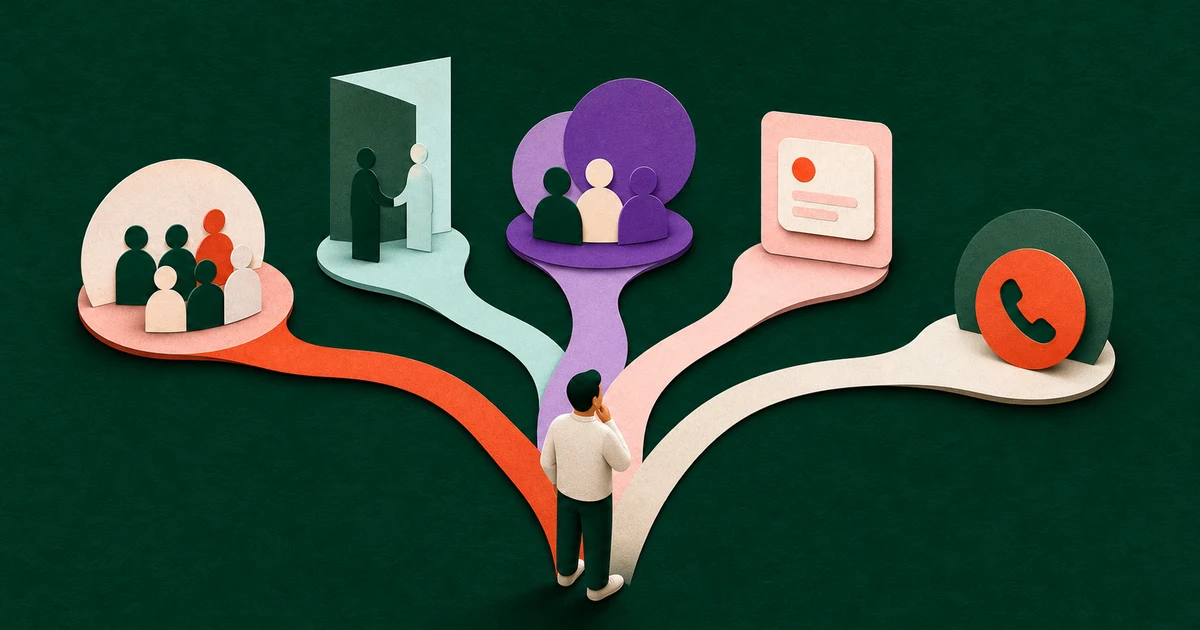
Imagine I am connected to the same person on X, LinkedIn, Facebook, Instagram, WhatsApp, and iMessage—and I also have their phone number. Where should I contact them?
The answer is not “wherever they are most likely to see it.” That turns access into pressure. The right channel is the one that fits the relationship, the subject, and the amount of attention I am asking them to give.
My rule is:
Relationship sets permission. Subject selects the channel. Urgency determines how much interruption is justified.
The four default rules.
1. Continue where the context began.
If I am responding to a post, story, photo, job update, or group conversation, I begin on the platform where it happened. The context is already there, so the recipient does not have to reconstruct why I am writing.
If someone posts a product idea on X, I reply on X. If they announce a new role on LinkedIn, I congratulate them there. If they share vacation photos on Instagram, an Instagram reply is natural.
Moving the same interaction immediately to text or WhatsApp can make a lightweight moment feel more intimate or demanding than intended.
2. Use the least interruptive channel that can do the job.
A public reply asks for little. A direct message asks for more. A text enters a person’s daily communication stream. A phone call asks for their attention now.
The channel should become more interruptive only when the subject requires it. A useful article does not need a phone call. A time-sensitive change of plans should not sit in a social-media inbox.
3. Established norms beat generic platform rules.
If a friend and I have used WhatsApp for years, I do not need to move a professional question to LinkedIn just because the subject involves work. I can use our normal channel and make the shift in context explicit: “Separate work question, if you are open to it.”
The platform map below is a default for ambiguous situations. The communication pattern two people have already established is usually better evidence.
4. Never switch channels merely to force a response.
Sending a LinkedIn message, then an Instagram DM, then a text does not make a request more important. It multiplies the pressure.
My default is one message, on one channel, followed by a reasonable wait. I switch channels only when the context changes, the matter becomes genuinely urgent, or the person has asked me to.
What each platform is for.
| Channel | Best use | Poor use |
|---|---|---|
| X | Ideas, public writing, technical discussion, links, and lightweight professional conversation | Sensitive subjects, detailed coordination, or chasing a reply through DMs |
| Career updates, professional introductions, former colleagues, roles, and clearly framed business requests | Personal news between real friends or generic sales pitches disguised as connection | |
| Family and community updates, groups, events, reunions, and established social circles | Urgent logistics or confidential conversations | |
| Everyday social contact, photos, interests, celebrations, and replies to stories | High-stakes requests or turning a casual reaction into an assumed relationship | |
| Existing friendships, family, group plans, travel, international contacts, and active collaboration | Unsolicited outreach simply because a number was available | |
| Text or iMessage | Direct plans, short check-ins, timely updates, and people who already use the channel together | Long briefs, cold professional requests, or repeated follow-ups |
| Phone | Emergencies, emotional care, conflict repair, ambiguity, and decisions that benefit from real-time conversation | Information that can be read asynchronously without demanding immediate attention |
This is not a ranking from bad to good. Each channel solves a different coordination problem.
Choose by relationship and purpose.
The platform alone is not enough. The same message changes meaning depending on who sends it.
| Relationship and purpose | Default channel | Reason |
|---|---|---|
| Acquaintance responding to a public idea | Reply on the original platform | Keeps the interaction proportional to the relationship. |
| Person known through professional work | LinkedIn or the platform where the work appeared | Makes the professional context clear. |
| Former colleague reconnecting about work | Restores context without assuming personal access. | |
| Existing friend asking a professional question | The private channel already used together | The friendship’s established norm matters more than the topic label. |
| Friend sharing a joke, photo, or casual reaction | Instagram, Facebook, or the existing social thread | Keeps lightweight interaction lightweight. |
| Friend making plans | WhatsApp, text, or iMessage | Direct enough for coordination without requiring a call. |
| Active collaborator handling a quick decision | The team’s work system; private messaging if time-sensitive | Keeps durable work findable while allowing fast coordination. |
| Someone discussing conflict, grief, health, or a sensitive decision | Text to arrange a call, then phone | Tone and emotional presence matter. |
| Anyone facing an urgent safety or logistical issue | Call, then text if unanswered | Urgency justifies interruption. |
How to move a conversation between channels.
Sometimes the original channel stops being appropriate. A public exchange becomes commercially specific. An Instagram conversation turns personal. A text thread becomes too complicated to resolve in writing.
The respectful move is to propose the transition rather than silently escalating it:
- “This probably does not belong in public. May I DM you?”
- “There are a few moving parts here. Want to switch to WhatsApp?”
- “I do not want tone to get lost over text. Is there a good time to call?”
- “This decision should be recorded. I will summarize it in the project thread.”
Permission matters most when moving from a low-pressure channel to a more intimate or interruptive one.
Common cases.
Congratulations.
Congratulate someone where they shared the news. A LinkedIn promotion belongs on LinkedIn; a family milestone on Facebook or Instagram belongs there. Send a private message only when the relationship warrants something more personal than the public acknowledgment.
An opportunity or introduction.
For a professional acquaintance, use LinkedIn and state the relevance, the ask, and the expected commitment. For a close friend, use the channel you normally share—but signal that the message concerns work and make declining easy.
Reconnecting after a long silence.
Use the channel that best represents the relationship you actually had, not the closeness you hope to recover. LinkedIn is appropriate for an old colleague. Facebook or Instagram may be natural for an old social friend. A direct text makes sense when texting was already normal between you.
Making plans.
Move from the social platform to WhatsApp or text once there are dates, locations, or other logistics to settle. Public comments and story replies are good for beginning; direct messaging is better for coordinating.
A disagreement.
Do not turn a private relationship into a public contest. If the relationship matters, move from comments to a private message. If tone or nuance continues to fail, ask for a call. A longer argument is not necessarily a clearer one.
No response.
Silence does not create permission to search for a more intrusive channel. Follow up once when the matter reasonably warrants it. If the matter becomes urgent, say what changed. Otherwise, allow the person to decline through non-response.
Public, private, urgent, or durable?
When the choice is still unclear, I use four final questions:
- Is the context already public? Stay on the original platform unless privacy adds real value.
- Is the subject personal or sensitive? Use an established private channel.
- Does it require attention now? Text or call only when the urgency is genuine.
- Will someone need to find this decision later? Put it in the shared work system, even if the conversation happened elsewhere.
No platform is universally professional, personal, polite, or rude. Etiquette comes from proportion.
Being connected everywhere does not mean every channel is equally available. Good communication uses the access a relationship has earned, asks for no more attention than the situation deserves, and leaves the other person room to answer now, later, or not at all.