How a lightweight “traffic‑cop” model keeps your enterprise chatbots from hallucinating — while finally giving mini‑models a job they’re great at.
TL;DR Retrieval‑Augmented Generation (RAG) supercharges LLMs with private data, but it can still inject irrelevant or noisy snippets that confuse downstream tools and users. AI Routing adds a thin, fast model in front of your RAG pipeline to decide which collections, databases, or micro‑capabilities (“MCPs”) a query truly needs. The result: leaner context windows, cleaner tool calls, and rock‑solid enterprise answers — delivered in <100 ms with a few smart optimizations.
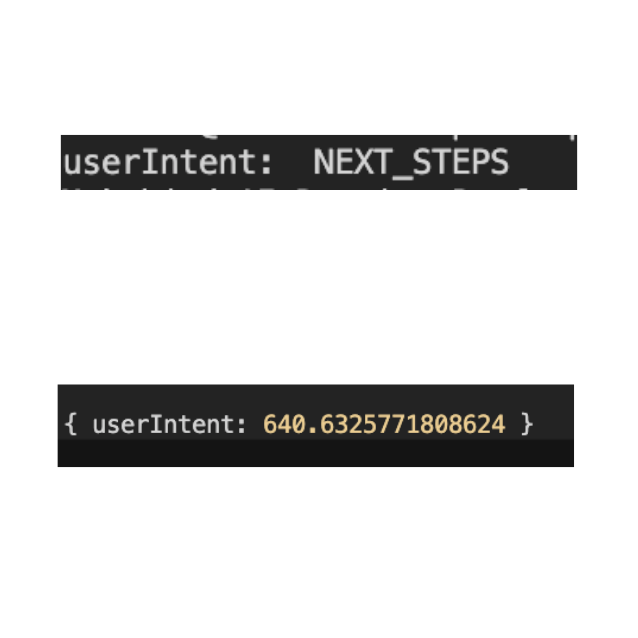
Razroo’s AI Router currently at 640 MS latency
The Problem: RAG Is Powerful — but Indiscriminate
RAG’s promise is simple: combine the reasoning strength of an LLM with the factual grounding of your knowledge base. In practice, though, a vanilla RAG pipeline often:
- Over‑retrieves: pulls 50 passages when the answer lives in two.
- Mixes domains: blends HR policy with product docs because both mention “vacation.”
- Clogs tool calls: bloated context prompts push function‑calling JSON over 16 k tokens.
In an enterprise setting — think compliance, analytics, or critical decision support — those mistakes translate to hallucinations, wrong dashboards, or mis‑routed tasks. Stakeholders lose trust fast.
Enter AI Routing
AI Routing inserts a micro‑model — small enough to run on CPU — in front of your retriever. Its single job:
- Classify the incoming query (intent, domain, sensitivity).
- Select the minimal set of data collections / DB tables / MCPs required.
- Inject only those URIs or indices into the RAG prompt.
If no collection passes a confidence threshold, the router can even return a “no‑answer” token, preventing garbage retrieval.
Why Mini Models Shine Here
- Low latency (<50 ms even on commodity instances).
- Narrow focus reduces the need for gigantic parameter counts.
- Easier fine‑tuning on small, labeled routing datasets.
In my own deployments, a distilled‑MiniLM variant scored >92 % F1 on routing accuracy and brought overall answer relevance up by 17 pp.
Architecture at a Glance
flowchart LR
    A[User Query] --> B[AI Router (Mini Model)]
    B -->|collections[]| C[Vector Retriever]
    C --> D[LLM + Tool Calling]
D --> E[Response]- Router (32–128 M params, CPU)
- Retriever (FAISS / Elastic KNN / PGVector / Qdrant)
- LLM (GPT‑4o, Claude‑3, etc.)
- MCP layer (Function‑calling micro‑services)
Performance Tuning: From 640 ms to Sub‑100 ms
My baseline implementation clocked ≈640 ms end‑to‑end. Here’s the shaving plan:
- Vectorization cache for repeat queries (−120 ms).
- Indexed routing outputs (think intent→collection map; −90 ms).
- Asynchronous prefetch of top‑k docs while the router streams logits (−70 ms).
- Quantization + batch‑size 4 on the mini‑model (−110 ms).
Target: 80–100 ms median latency — fast enough for chat UIs and background tool calls alike.
Implementation Blueprint
- Label 1–2 k queries with correct collections/MCPs.
- Fine‑tune a MiniLM/BERT‑base using multi‑label classification.
- Wrap the router in an API that emits JSON:
{
  "collections": ["ProdDocs", "PricingDB"],
  "tools": ["QuoteGenerator"]
}
4. Gate the retriever + LLM behind the router’s output.
5. Log + retrain monthly; routing drift is slow but real.
Real‑World Example
Query: “What’s the SLA for our EU‑West region and how do I file an escalation?”
Pipeline Stage Outcome Router Picks SLA_DB, Escalation_Playbook collections; ignores Marketing, HR, etc. Retriever Returns 3 SLA docs + 1 escalation SOP (total 620 tokens). LLM generates a concise answer plus auto‑calls the CreateTicket MCP with correct priority.
Without routing, the retriever previously stuffed 18 docs (3 k tokens) and the LLM called the wrong ticketing function. ☠️
Why This Matters for Enterprise AI
- Compliance — Fewer off‑topic docs means lower exposure of restricted data.
- Cost — Slimmer prompts cut token spend by 30‑50 %.
- Trust — Business users see crisp, reliable answers — not hallucinated mash‑ups.
Looking Ahead
- Graph‑based routing to capture inter‑collection dependencies.
- Self‑optimizing indices that learn which vectors matter most per intent.
- Router distillation into on‑device models (<10 M params) for edge apps.
Final Thought
AI Routing won’t replace RAG; it enables RAG to hit enterprise‑grade SLAs. By giving humble mini‑models a focused, high‑leverage role, we keep our large models honest — and our users happy.
Latency is just engineering; relevance is strategy.
Have you tried AI Routing in production? Share your wins (and war stories) in the comments.